So, this morning has come

Have fun!


Scientists from Wiltshire who have been making test flights into the volcanic ash cloud say the decision to close UK airspace is not an over-reaction. BBC.

"It was like wandering across the surface of another world," says Bramley Murton, a geologist at the National Oceanographic Centre (NOC) in Southampton, UK, who piloted the Hy-up underwater vehicle around these deep volcanic vents and filmed them for the first time.
"The rainbow hues of the mineral Spires and the fluorescent blues of the microbial mats covering them were like nothing I had ever seen before, "Murton says.


"The tree that the sap is produced, but the amber's chemistry is surprisingly very much like that of a group of more recent New World angiosperms called Hymenaea, "says Nascimbene." Amber This could be from an early angiosperm or a previously-unknown conifer that is quite distinct from the other known Cretaceous amber-producing gymnosperms. "
" The first angiosperms, or flowering plants , appeared and diversified in the Cretaceous, "says first author Alexander Schmidt of the University of Gottingen in Germany." Their rise to dominance drastically changed terrestrial ecosystems, and the Ethiopian amber deposit sheds light on this time of change. "
"Until now, we had discovered virtually no Cretaceous amber sites from the southern hemisphere's Gondwanan supercontinent," says author Paul Nascimbene of the Division of Invertebrate Zoology at the American Museum of Natural History. "Significant Cretaceous amber deposits had been found Primarily in North America and Eurasia."


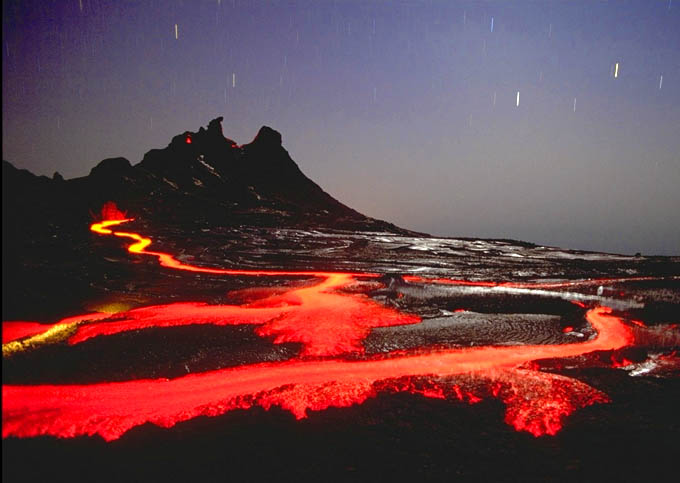
This lava is very fluid, is about the viscosity of water. Recently solidified lava has a dark color, which quickly becomes a light beige. the lava of this volcano reached a maximum 590 ° C, compared to other volcanoes, lava, a relatively low temperature comes, but much deeper layers of the Earth's interior.
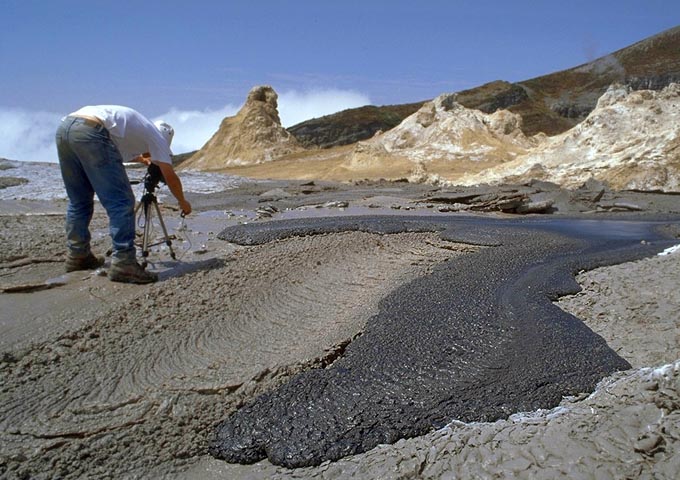
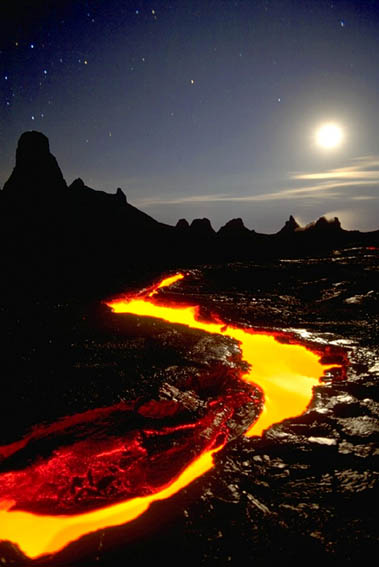

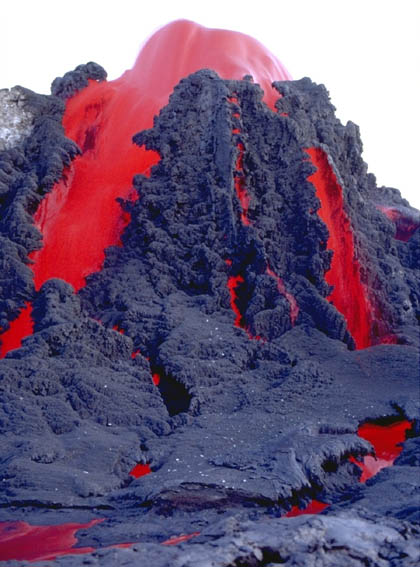
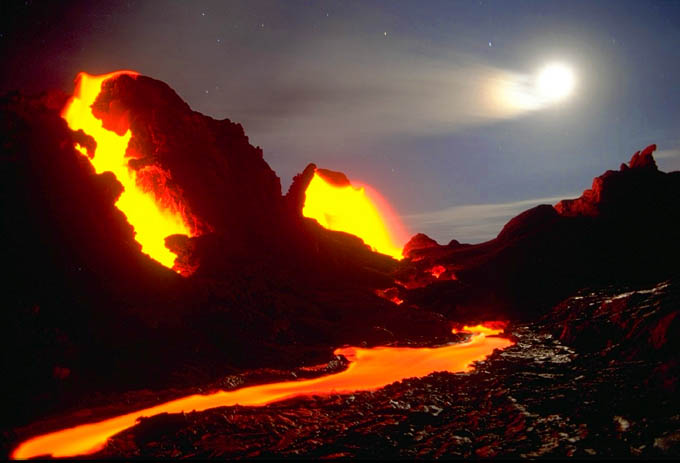
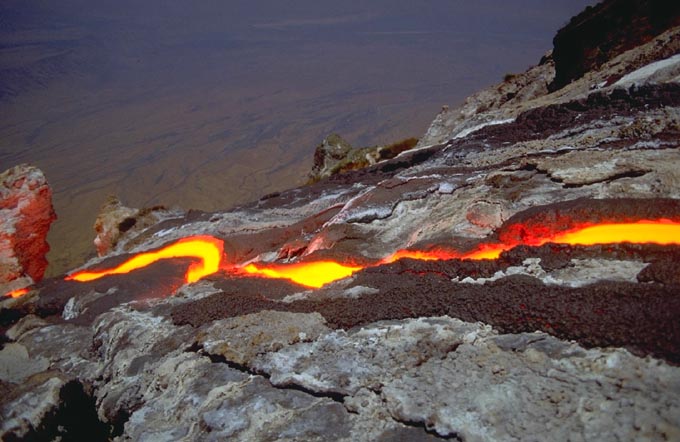
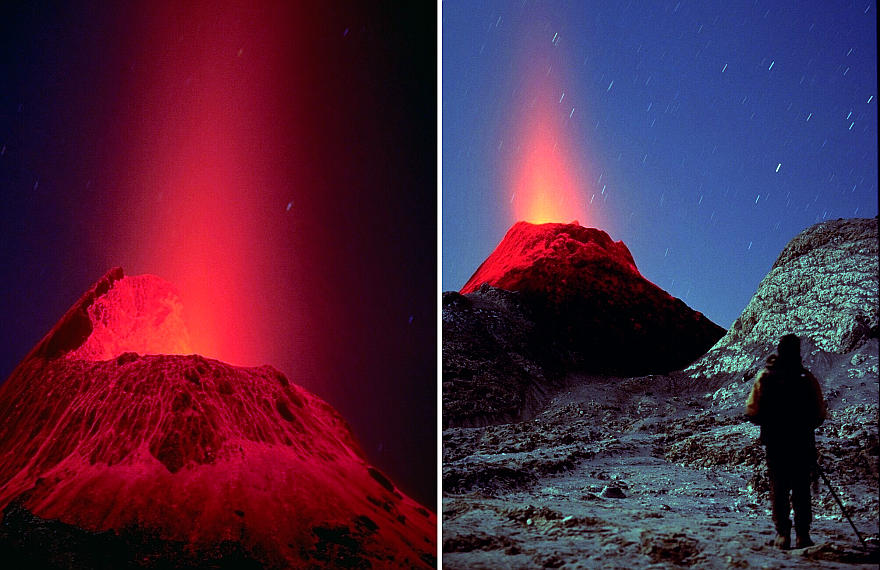

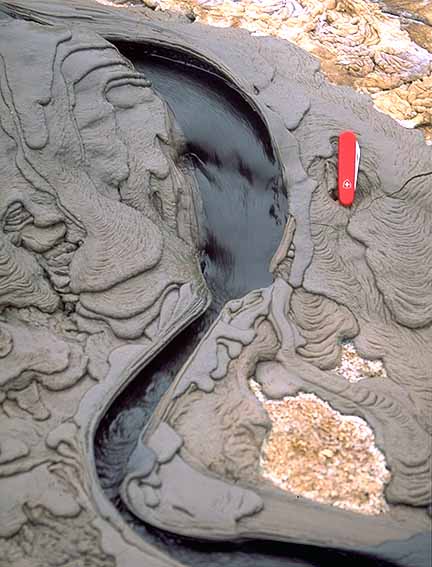

Ol Doinyo Lengai volcano, altitude 2886 meters, is a unique and extremely fascinating volcano that towers above the East African Rift Valley in Northern Tanzania, just south of Lake Natron. It is the only volcano in the world that sometimes erupts natrocarbonatite lava, a highly fluid lava that contains almost no silicon. Natrocarbonatite lava is also much cooler than other lavas, being only about 510 degrees C compared to temperatures over ~1100 degrees C for basaltic lavas. Natrocarbonatite is the most fluid lava in the world. Lava with a low gas content can flow like a whitewater stream, and actually has a viscosity near that of water. Natrocarbonatite lava glows orange at night, but is not nearly as bright as silicon-based lavas since it is not as hot.During the day it is not incandescent; most flows look like very fluid black oil, or brown foam, depending on the gas content. In the past, some visitors to the crater believed they were seeing mud flows. Most newly solidified lava is black and contains crystals that sparkle brightly in the sun. There are also sometimes small flows known as "squeeze-ups" that are light gray when they flow and harden. Contact with moisture rapidly turns natrocarbonatite lava white because of chemical reactions that occur when the lava absorbs water. Eventually the water absorption process turns lava flows into soft brown powder. During dry weather the whitening of flows happens over a period of a few days to a couple of weeks, depending on the thickness of the flow. In rainy weather the lava surface turns white immediately. In parts of the crater that have been inactive for several months, the ground is light brown/white and so soft that one sinks into it when walking.


